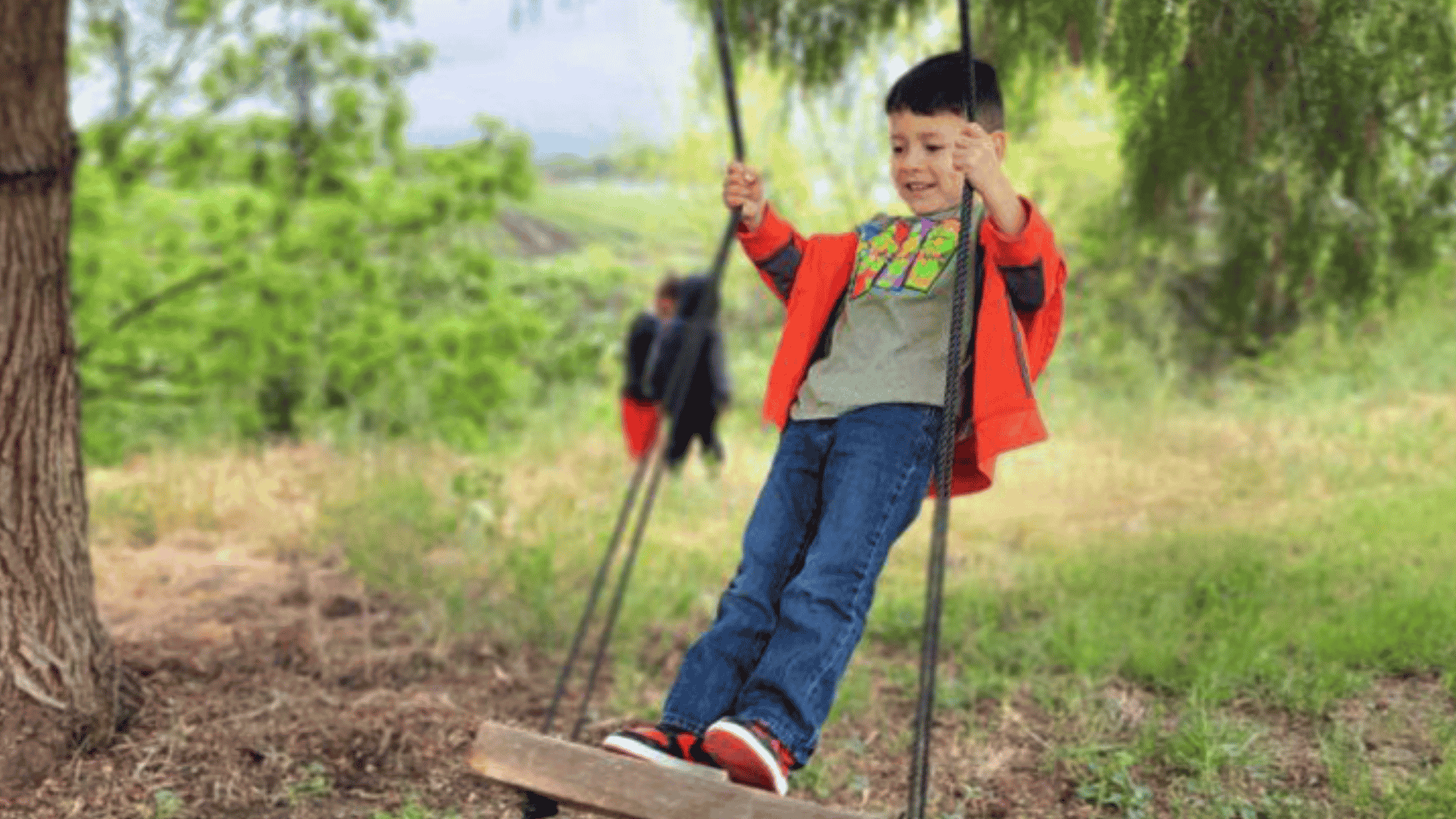
If you have started looking at preschools in Stockton, you have probably seen the phrases "play-based," "nature-based," and "nature play-based" used almost interchangeably. They sound similar, but they describe meaningfully different approaches to early learning. This guide explains what nature play-based learning actually is, why it matters for young children, and what it looks like day to day.
At Meadowlark Schools, nature play-based learning is the heart of everything we do. Understanding it can help you decide whether this approach is the right fit for your child and your family.
Quick Summary
- Nature play-based learning blends child-led play with daily, hands-on time in the natural world.
- Research links both play and time in nature to stronger thinking skills, focus, and social-emotional growth.
- Children learn academic concepts like early literacy, math, and science through real experiences rather than worksheets.
- The approach supports the whole child: head, hands, and heart.
- Meadowlark practices it every day at our Stockton campus, in all seasons and all weather.
What Is Nature Play-Based Learning?
Nature play-based learning is an approach to early childhood education built on two connected ideas: children learn best through play, and that play is richest when it happens in and with nature. Rather than sitting at desks completing worksheets, children explore, build, experiment, and imagine, using outdoor spaces and natural materials as their classroom.
The "play-based" part means learning is driven by a child's own curiosity. Teachers set up rich environments, then observe, ask thoughtful questions, and gently extend what children discover on their own. The "nature" part means the outdoors is not an occasional field trip. It is the primary setting for learning, from a garden bed to a fallen log to a rainy-day puddle.
Put together, nature play-based learning treats a young child as a capable, active participant in their own growth, not a passive recipient of information.
How It Differs From a Traditional Preschool Day
In many traditional settings, children spend much of the day indoors in structured, adult-directed activities. A nature play-based day shifts that balance. Children spend significant time outdoors following their interests, while teachers guide the learning that naturally emerges.
That does not mean the day lacks structure. There is a predictable rhythm and clear expectations. The difference is that curiosity leads, and academic skills are woven into meaningful, hands-on experiences.
The Core Principles
Nature play-based learning rests on a few principles that shape every part of the day.
Child-Led, Hands-On Play
Children are natural investigators. When they are free to follow a question, they stay engaged longer and understand more deeply. Teachers act as guides who notice a child's interest and help it grow, turning a fascination with worms or water into real lessons about life cycles and cause and effect.
Learning Outdoors and With Natural Materials
Natural environments offer endless, open-ended possibilities that manufactured toys cannot match. Wood, stone, water, sand, and plants invite children to sort, build, balance, and create in ways that change every day. These materials engage all the senses and support steady physical and cognitive growth.
Whole-Child Growth: Head, Hands, and Heart
Meadowlark's philosophy centers on educating the head, hands, and heart. That means we nurture thinking skills, physical capability, and emotional and social growth together, rather than treating academics as separate from a child's wellbeing. A confident, curious, emotionally secure child is a child who is ready to learn.
Why It Matters: The Benefits for Young Children
The case for nature play-based learning is not just intuitive. It is supported by a growing body of research from pediatric and child-development experts.
Thinking Skills and Kindergarten Readiness
Play is often misunderstood as the opposite of learning. In fact, the American Academy of Pediatrics describes play as a powerful driver of healthy brain development, one that strengthens the executive function skills children use to focus, plan, solve problems, and get along with others. The same research connects play to gains in language, early math, and self-regulation, all of which lay the groundwork for a smooth start to kindergarten.
Social-Emotional Growth and Confidence
Open-ended, outdoor play gives children constant practice in cooperation, negotiation, and managing big feelings. When a child decides how high to climb or how to share a set of loose parts with a friend, they build confidence, independence, and resilience. These are the quiet skills that help children thrive long after preschool ends.
Physical Health, Motor, and Sensory Development
Time outdoors builds strong, capable bodies. The Children & Nature Network points to research showing that regular time in nature improves children's focus, behavior, and academic performance, and notes that the brain develops faster from birth to age five than at any later stage. Climbing, balancing, digging, and running develop coordination and core strength, while varied natural textures and sounds sharpen the senses.
What a Nature Play-Based Day Looks Like at Meadowlark
Principles are easier to picture with a real example. While each day flows according to children's interests, a typical rhythm at our Stockton campus includes:
- Morning arrival and open exploration time
- A morning circle to build community
- Extended outdoor time in our natural play spaces and garden
- A family-style lunch
- Rest or quiet time
- Afternoon activities, often outdoors again
- A closing circle and departure
Throughout the day, children spend meaningful time outside in all seasons. We hold to a simple belief: there is no such thing as bad weather, only inappropriate clothing. Children dress for the conditions and gain resilience by experiencing the changing seasons firsthand.
You will also see plenty of "risky play," which means age-appropriate challenges like climbing to a sensible height, balancing on a log, or using real tools with close supervision. We carefully distinguish between hazards, which we remove, and healthy risks, which we help children learn to manage. This is how young children build confidence and sound judgment.
Bringing Nature Play-Based Learning Home
We believe parents are their children's first and best educators, and nature play-based learning does not have to stop at our gate. The most powerful thing families can do is carry the same spirit into their own world, at their own pace.
A few simple ideas to try at home:
- Set up a mud kitchen using recycled containers and let the mess happen.
- Build a "loose parts" basket of pinecones, stones, sticks, and shells for open-ended play.
- Take slow, wandering nature walks in your neighborhood or a local park and follow your child's questions.
- Start a small garden with child-sized tools and let your child plant, water, and harvest.
- Create a cozy outdoor reading nook for stories in the fresh air.
The goal is not to recreate a classroom. It is to give your child unhurried time to notice, wonder, and play in the natural world around them.
Frequently Asked Questions
Is nature play-based learning the same as outdoor school?
They overlap, but they are not identical. Outdoor school describes where learning happens. Nature play-based learning describes both where and how: children learn outdoors and through their own child-led play, with teachers guiding along the way.
Does play-based learning prepare children for kindergarten?
Yes. Children develop early literacy through storytelling and journaling, math through building and sorting, and science through observing the natural world. Along the way they build the focus, self-regulation, and social skills that help them succeed once they reach a more structured classroom.
What ages is nature play-based learning best for?
The approach suits the full early-childhood range. Meadowlark's Stockton campus serves children from 6 weeks to 6 years, spanning infant, toddler, and preschool ages, with experiences tailored to each stage.
What happens on rainy or cold days?
Children still head outside, with adaptations for the conditions. We provide guidelines for weather-appropriate clothing and keep extra gear on hand, so a little rain becomes an invitation to explore rather than a reason to stay in.
Where can I find a nature play-based preschool in Stockton?
Meadowlark Schools offers nature play-based learning at our Stockton campus for children 6 weeks to 6 years. You are welcome to schedule a tour and see it in action.
Bringing It All Together
Nature play-based learning is not a trend. It is a research-supported approach that honors how young children are built to learn: through play, through their senses, and through daily connection with the natural world. When children are trusted to explore, they grow into confident, curious, and capable learners.
If this approach resonates with you, we would love to show you what it looks like in person. You can explore our approach to nature, read more about why nature-based learning matters, and reach out to schedule a tour of our Stockton campus.