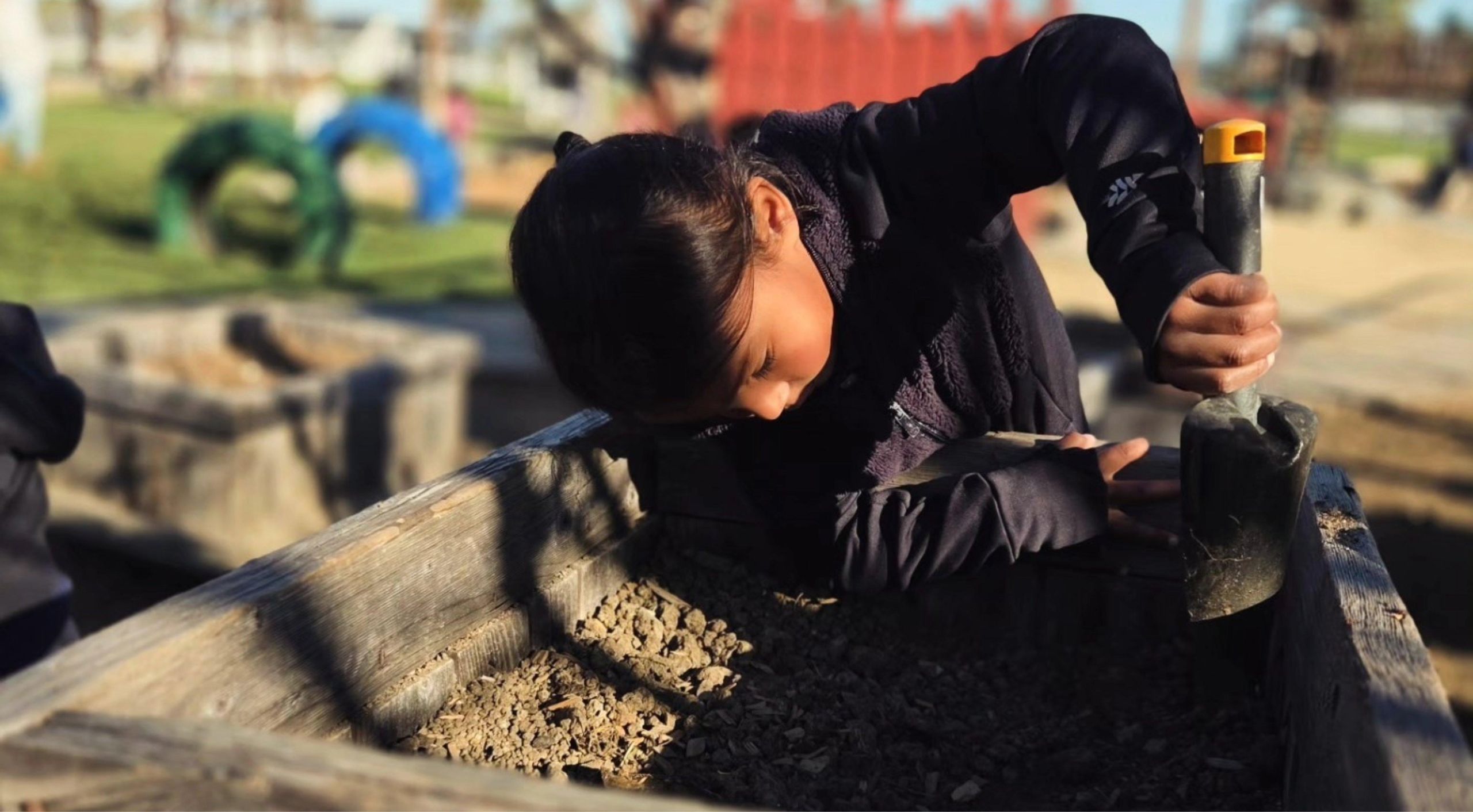
When most people think about fine motor skill development in preschoolers, they envision children carefully tracing lines on worksheets or practicing scissor cuts on construction paper. While these traditional activities certainly have their place in early childhood education, they represent just a fraction of the rich fine motor learning opportunities that natural environments provide. At Meadowlark Schools, we've discovered that the most powerful fine motor development happens when children engage their whole bodies while manipulating natural materials in outdoor settings.
Fine motor skills—the small muscle movements in hands, fingers, and wrists—develop most effectively when they're connected to meaningful, engaging activities that capture children's interest and imagination. Natural environments provide endless opportunities for this type of integrated learning, where fine motor control develops alongside gross motor strength, sensory processing, and cognitive problem-solving abilities.
Rather than isolating fine motor practice into artificial worksheet activities, nature-based education recognizes that children develop these crucial skills most effectively through authentic, whole-body experiences that engage multiple systems simultaneously. This integrated approach not only builds stronger fine motor abilities but also creates more meaningful and memorable learning experiences.
Fine Motor Development in Early Childhood
What Are Fine Motor Skills and Why They Matter
Fine motor skills involve precise movements of small muscles in hands, fingers, and wrists. These abilities are essential for daily activities and academic success.
Essential daily activities requiring fine motor skills:
- Writing and drawing
- Buttoning clothes and zippers
- Using utensils for eating
- Manipulating small objects and toys
- Cutting with scissors
Research shows that fine motor skills directly correlate with academic readiness. Children with well-developed fine motor abilities demonstrate greater success in early academic tasks and more confidence in learning environments.
Fine motor development follows this predictable sequence:
- Shoulder stability develops first
- Elbow control comes next
- Wrist stability follows
- Finger precision develops last
This progression explains why whole-body engagement and gross motor strength provide essential foundations for fine motor success. Rushing children into detailed tasks before foundational systems are ready can actually hinder development.
The Relationship Between Gross and Fine Motor Development
Fine motor skills cannot develop independently from gross motor abilities. The stability and strength children develop through large muscle movements directly support the control needed for small muscle tasks.
How gross motor activities support fine motor development:
- Core strength from climbing and balancing provides stability for hand control
- Shoulder strength from carrying and lifting enables arm positioning for precise tasks
- Bilateral coordination from whole-body activities supports two-handed fine motor tasks
- Postural control from active play allows hands to move freely and accurately
Natural environments provide ideal settings for this integrated development. When a child reaches across their body to pick berries, they're strengthening core muscles while practicing precise pincer grasp. When they balance on a log while manipulating materials, they're developing postural control that supports seated fine motor activities.
This connection explains why children who spend significant time in active outdoor play often demonstrate superior fine motor abilities compared to peers who focus primarily on seated activities.
Traditional vs. Nature-Based Approaches to Fine Motor Development
Traditional fine motor instruction often lacks engagement and meaningful context that optimize learning.
Traditional approach limitations:
- Repetitive, isolated activities (tracing lines, cutting marked paths)
- Lack of meaningful context or purpose
- Standardized expectations that may not match individual development
- Limited sensory input from flat materials
Nature- and play-based approach advantages:
- Skills integrated into authentic, purposeful activities
- Children naturally choose appropriate challenge levels
- Multiple sensory systems engaged simultaneously
- Greater persistence and creativity demonstrated
- Better skill transfer to other contexts
Research shows children demonstrate superior engagement and skill development when fine motor practice occurs within meaningful, play-based contexts.
Natural settings provide automatic differentiation—children naturally select materials and challenges appropriate for their abilities, while traditional worksheets often present one-size-fits-all expectations.
Natural Materials as Fine Motor Tools
Pinecones, Sticks, and Stones as Learning Materials
Nature provides endless fine motor learning materials that engage children's senses while challenging dexterity in varied ways. Unlike manufactured toys with limited possibilities, natural materials offer infinite opportunities for exploration and skill development.
Pinecones offer unique challenges:
- Varied textures requiring grip adjustments
- Individual scales to remove (pincer grasp practice)
- Painting tools with irregular surfaces
- Building materials requiring precise placement
Sticks provide opportunities for:
- Tool use and construction projects
- Bilateral coordination (breaking to desired lengths)
- Artistic expression in sand or mud
- Fine motor planning through building activities
Stones challenge children with:
- Weight and texture variations
- Grip strength and control development
- Visual discrimination through sorting
- Precise placement in stacking activities
The three-dimensional nature of these materials provides sensory feedback that flat worksheets cannot match, helping children develop better body awareness and control through tactile input.
Seasonal Materials and Their Unique Benefits
Each season offers distinct fine motor learning opportunities through materials that naturally capture children's interest while preventing skill development from becoming repetitive.
Spring Materials:
- New leaves and flower petals (gentle handling practice)
- Small seeds (precise placement during planting)
- Tender plant shoots (pressure control development)
- Fresh growth (delicate manipulation skills)
Summer Materials:
- Berries (pincer grasp refinement)
- Shells and smooth stones (varied textures)
- Sand and water (resistance building hand strength)
- Garden vegetables (harvesting coordination)
Fall Materials:
- Acorns and nuts (varied shapes and sizes)
- Colorful leaves (sorting and patterning activities)
- Seed pods (opening and exploration)
- Abundance encouraging artistic creativity
Winter Materials:
- Snow and ice (cold adaptation challenges)
- Bare twigs (precise manipulation)
- Evergreen needles (tiny object handling)
- Materials requiring glove accommodation
This seasonal approach ensures fine motor development remains engaging throughout the year while connecting children to environmental changes and natural cycles.
Tool Use with Natural Objects
One of the most powerful aspects of nature-based fine motor development involves children's authentic use of tools with natural materials. Unlike toy tools that often provide simplified experiences, real tools used appropriately with natural materials challenge children's coordination while building genuine competence and confidence.
- Garden Tools: Child-sized shovels, rakes, and trowels provide opportunities for bilateral coordination, wrist rotation, and pressure control as children dig, plant, and tend garden areas. The resistance of soil builds hand strength while successful gardening creates meaningful connections to food and growth cycles.
- Art Tools: Brushes, stamps made from natural materials, and simple carving tools allow children to create art using nature's palette. Painting with mud, creating prints with leaves, or carving designs in clay develops precise control while encouraging creativity and expression.
- Building Tools: Simple hand tools used for construction projects—hammers, screwdrivers, measuring tools—build bilateral coordination and tool competence when used under appropriate supervision. Real tools provide authentic feedback that toy versions cannot match.
The key to successful tool use lies in careful adult guidance, appropriate tool selection, and meaningful projects that engage children's interest while building genuine skills they can transfer to other contexts.
Whole-Body Integration in Natural Settings
How Outdoor Environments Support Bilateral Coordination
Bilateral coordination—using both sides of the body together effectively—provides an essential foundation for fine motor success. Many tasks require one hand to stabilize while the other manipulates.
Natural activities promoting bilateral coordination:
- Tree climbing while carrying objects
- Building structures requiring two-handed lifting
- Tool use requiring stabilization
- Log rolling and rope climbing
- Collaborative construction projects
Research shows children engaging in regular bilateral coordination through outdoor play demonstrate superior performance on fine motor assessments compared to peers focusing on seated activities.
Balance and Stability as Foundations for Fine Motor Control
Postural control provides the stable foundation from which all fine motor movements originate. Children cannot develop precise finger control without core stability and balanced positioning.
Balance activities building fine motor foundations:
- Walking on logs and balancing on stones
- Navigating uneven terrain
- Fine motor tasks while maintaining balance
- Kneeling and reaching on unstable surfaces
Studies demonstrate that children engaging in regular balance activities show significantly improved fine motor assessment performance.
Sensory Integration Through Natural Play
Fine motor development requires sophisticated sensory processing as children learn to gauge pressure, coordinate visual input with hand movements, and adjust actions based on tactile feedback.
Natural materials providing rich sensory input:
- Wet sand versus dry sand (texture adaptation)
- Smooth stones versus rough bark (pressure adjustment)
- Flexible sticks versus rigid branches (resistance variation)
- Temperature changes requiring adaptation
This sensory-rich input helps children develop motor planning abilities—conceiving, organizing, and executing unfamiliar motor tasks with greater success.
Beyond Traditional Worksheets: Play-Based Fine Motor Activities
Building and Construction with Natural Materials
Construction using natural materials provides rich fine motor learning opportunities. Unlike manufactured building sets with predetermined connections, natural materials require problem-solving while developing precise manipulation skills.
Fort Building Benefits:
- Bilateral coordination through varied material manipulation
- Spatial awareness and construction planning
- Persistence building through complex projects
- Real-world problem-solving applications
Stone Stacking Challenges:
- Precision and balance requirements
- Visual-motor coordination development
- Patience and careful placement practice
- Constant grip and pressure adjustments
Natural Sculpture Creation:
- Creativity combined with fine motor challenge
- Weaving grasses through frameworks
- Complex pattern arrangements
- Temporary installations requiring precision
These activities naturally differentiate—children choose complexity levels appropriate for their skills while being challenged to extend abilities through engaging projects.
Art and Creativity Using Nature's Palette
Artistic expression with natural materials provides meaningful fine motor development contexts while supporting creativity and environmental connection.
Natural Painting Activities:
- Mud, berry juice, or water painting
- Varied resistance building hand strength
- Pressure control through medium consistency
- Personally meaningful artwork creation
Printmaking Projects:
- Leaf, flower, and shell printing
- Precise placement skill development
- Pressure control for desired results
- Visual-spatial planning practice
Weaving and Fiber Arts:
- Natural fiber and grass manipulation
- Bilateral coordination building
- Sequencing skill development
- Rich sensory input through varied textures
Clay and Sculpting Work:
- Natural clay resistance building hand strength
- Tool use skill development
- Three-dimensional thinking enhancement
- Unlimited creative expression opportunities
Gardening and Food Preparation Activities
Garden-based activities provide authentic fine motor development contexts while connecting children to food sources and natural cycles.
Seed Planting Skills:
- Precise pincer grasp requirements
- Careful placement and spacing
- Different seed sizes providing varied challenges
- Connection to plant growth understanding
Harvesting Activities:
- Ripeness assessment and gentle handling
- Pressure control preventing damage
- Various sizes and delicacies accommodation
- Judgment development alongside motor control
Food Preparation Tasks:
- Washing, chopping, preparing garden produce
- Authentic tool use opportunities
- Bilateral coordination development
- Safety awareness building
Plant Care Responsibilities:
- Watering, weeding, tending activities
- Gentle touch and precise movement requirements
- Responsibility and stewardship development
- Sustained practice over time
These garden activities connect fine motor development to Meadowlark's farm-to-school vision, creating meaningful experiences supporting multiple developmental domains.
Meadowlark's Approach to Integrated Motor Development
At Meadowlark Schools, we recognize that fine motor skills develop most effectively when they're integrated into meaningful, whole-body experiences that engage children's natural curiosity and interests. Our nature-based approach provides daily opportunities for this integrated development through authentic outdoor experiences.
Our teachers are trained to recognize and support fine motor development opportunities within natural play experiences rather than separating these skills into isolated practice sessions. When children show interest in building with sticks, teachers might provide simple tools or suggest collaborative projects that extend the fine motor challenges while maintaining engagement and meaning.
We carefully observe each child's fine motor development and provide individualized challenges that support growth without frustration. Our natural environment allows children to self-select appropriate challenges while teachers offer gentle extensions that encourage skill development.
Our approach also recognizes that different children develop fine motor skills along different timelines and through different modalities. Some children benefit from repetitive practice, others from varied challenges, and still others from collaborative activities that provide peer modeling and support.
Frequently Asked Questions
How do nature-based activities prepare children for handwriting and academic tasks?
Nature-based fine motor activities build the foundational strength, control, and coordination that support all fine motor tasks, including handwriting. Children who develop skills through meaningful, engaging activities often demonstrate better persistence and confidence when approaching academic tasks. The bilateral coordination, core strength, and sensory integration developed through outdoor activities provide essential foundations for writing success.
Are traditional fine motor activities like tracing and cutting still important?
Traditional activities have value as part of a comprehensive approach, but they work best when balanced with meaningful, engaging experiences. Children who have built foundational skills through nature-based activities often approach traditional tasks with greater competence and confidence. We integrate both approaches to ensure children receive comprehensive fine motor support.
What if my child avoids activities that challenge their fine motor skills?
Children naturally gravitate toward activities at their comfort level, which can sometimes mean avoiding challenging tasks. Nature-based activities often provide less obvious skill challenges that children approach more willingly. Our teachers are skilled at recognizing each child's interests and incorporating fine motor challenges into preferred activities.
How can parents support fine motor development at home?
Parents can provide nature-based fine motor opportunities through simple activities like gardening, nature collecting, outdoor art projects, and cooking with natural ingredients. The key is finding activities that match your child's interests while providing appropriate challenges. Even apartment-dwelling families can incorporate natural materials into fine motor activities.
When should parents be concerned about fine motor development delays?
If children consistently avoid fine motor activities, show significant frustration with age-appropriate tasks, or demonstrate delays compared to peers, consultation with an occupational therapist can provide valuable assessment and support. Early intervention can address challenges before they impact academic success.
How do you ensure safety during tool use and challenging fine motor activities?
Safety remains our priority during all activities. We provide appropriate supervision, use child-sized tools, teach proper techniques, and ensure children understand safety rules before engaging in challenging activities. We distinguish between appropriate challenges that support development and unsafe risks that should be avoided.
Supporting the Whole Child Through Nature-Based Motor Development
Fine motor skills represent just one aspect of comprehensive child development, but they provide essential foundations for academic success, daily independence, and creative expression. When these skills develop through meaningful, engaging experiences in natural settings, children build not only hand coordination but also confidence, persistence, and love of learning.
The integrated approach of nature-based education recognizes that children learn most effectively when their whole bodies and minds are engaged in purposeful, interesting activities. Rather than isolating fine motor practice into artificial exercises, we embed these skills into authentic experiences that support multiple developmental domains simultaneously.
At Meadowlark Schools, we've witnessed countless children develop strong fine motor abilities through our nature-based approach while also building environmental awareness, creativity, and problem-solving skills. This comprehensive development prepares children not just for academic tasks but for confident engagement with the world around them.
The natural world provides endless opportunities for fine motor learning that worksheets simply cannot match. When children manipulate natural materials, use real tools for meaningful purposes, and engage their whole bodies in challenging activities, they develop skills that transfer effectively to all areas of learning and life.
Ready to see how nature-based education can support your child's comprehensive development, including fine motor skills? Contact Meadowlark Schools to schedule a tour and observe our integrated approach to early childhood development in action.