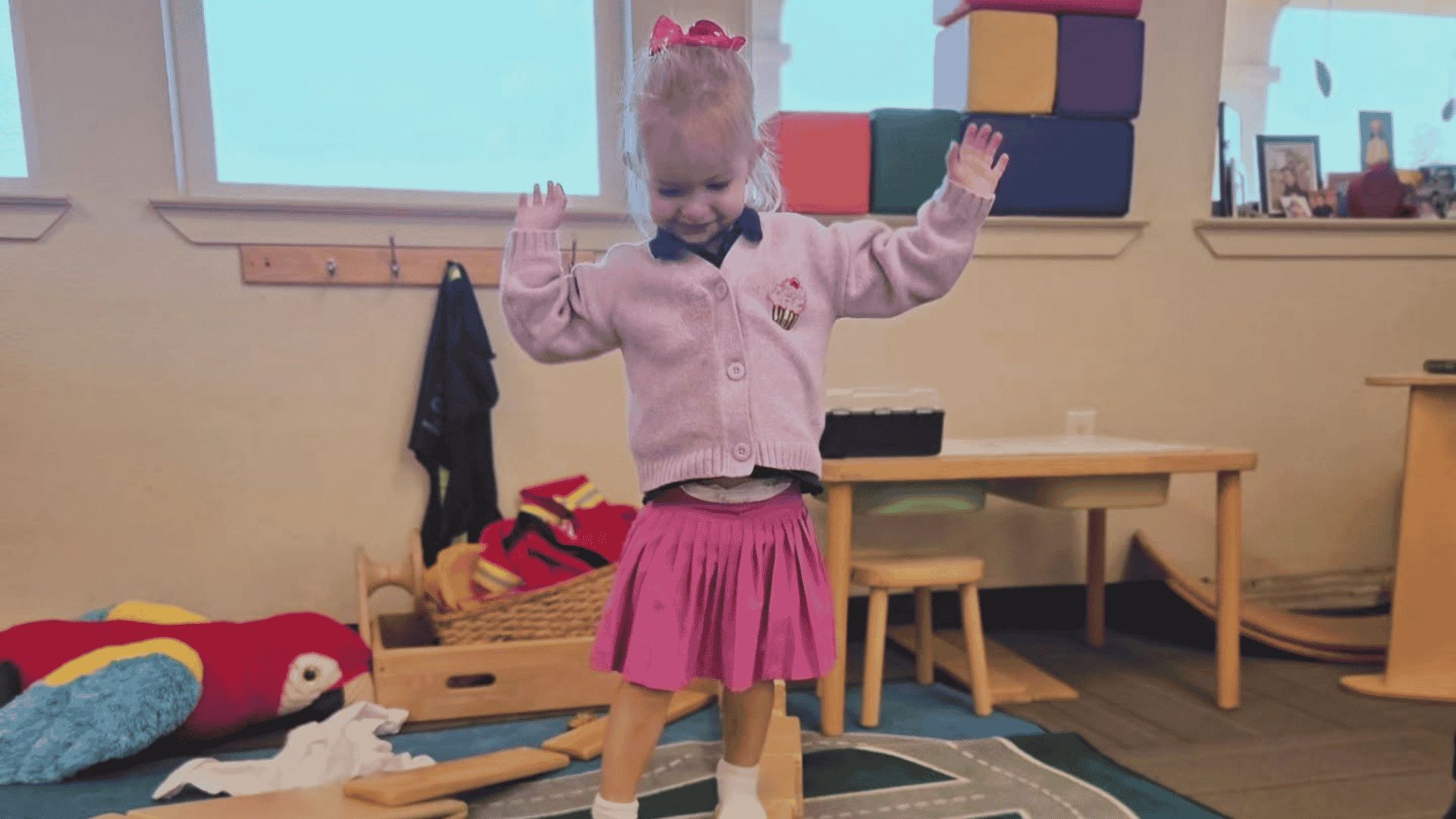
If your child is heading toward kindergarten, you've probably wondered whether all that time spent playing is really preparing them for school. It's a fair question, and the answer is reassuring: play-based learning is one of the most effective ways to build kindergarten readiness. When children build, pretend, dig, negotiate, and solve problems, they're developing the exact skills that help them thrive in a classroom. In this post, we'll look at what readiness really means, how play develops it, and how Meadowlark Schools nurtures it every day.
Quick Summary
- Kindergarten readiness is about far more than knowing letters and numbers. It includes self-regulation, focus, social skills, and a genuine love of learning.
- Play is how young children build executive function, the mental "control center" that research links directly to school success.
- Different kinds of play develop different readiness skills, from block play for math to dramatic play for language.
- Meadowlark's nature play-based approach weaves literacy, math, and science into hands-on experiences, with gentle structure to prepare children for the classroom.
- Families can support readiness at home with simple, everyday moments of play and conversation.
What Kindergarten Readiness Actually Means
Ask ten people what makes a child "ready" for kindergarten and you'll often hear about the alphabet, counting to twenty, and writing their name. Those skills matter, but they're only a small piece of the picture. The children who settle in most smoothly are the ones who can manage big feelings, focus on a task, follow directions, and get along with others.
Early childhood educators describe readiness across several connected areas of development. These include cognitive skills like problem-solving and early literacy, social-emotional skills like sharing and self-control, language and communication, and physical development from running to holding a pencil. A child who is strong across these areas walks into kindergarten prepared to learn, not just perform.
This broader view is exactly why play matters so much. Play builds the whole set of skills at once, in a way worksheets simply can't.
The Skill That Ties It All Together: Executive Function
If there's one idea worth understanding as a parent, it's executive function. The Center on the Developing Child at Harvard University compares these skills to an air traffic control system in the brain, helping children manage information, filter distractions, and juggle tasks. Executive function is made up of three core abilities: working memory, mental flexibility, and self-control.
Here's the encouraging part. Researchers note that ages three to five are a window of dramatic growth for these skills, which makes the preschool years a powerful time to build them. Strong executive function is considered foundational to school readiness, supporting the "how" of learning that lets children absorb the "what."
Play is one of the best ways to strengthen these abilities. The American Academy of Pediatrics, in its clinical report The Power of Play, explains that developmentally appropriate play promotes the social-emotional, cognitive, language, and self-regulation skills that build executive function. In other words, play isn't a break from learning. It's where much of the most important learning happens.
How Play Builds Each Readiness Skill
Not all play looks the same, and that's the point. Each kind of play strengthens a different set of readiness skills, and a rich preschool day offers many types.
Block and Construction Play Builds Math Thinking
When children stack, balance, and rebuild, they're exploring spatial awareness, symmetry, measurement, and cause and effect. They test ideas, watch towers fall, and try again. That trial-and-error process quietly builds the mathematical and engineering thinking kindergarten will call on.
Dramatic Play Builds Language and Social Skills
Pretend play, whether it's running a "restaurant" or caring for a baby doll, is a workout for language and cooperation. Children practice new vocabulary, tell stories, and negotiate roles with their friends. They also rehearse empathy by stepping into someone else's shoes, which supports the social-emotional side of readiness.
Outdoor Exploration Builds Focus and Curiosity
Time outdoors invites children to observe closely, ask questions, and notice change over time. Digging in a garden or watching a bug travel across a leaf develops scientific thinking and sustained attention. It also supports emotional regulation, since time in nature has been shown to calm the nervous system and lift mood.
Games With Rules Build Self-Regulation
Simple group games like "Simon Says" ask children to listen, wait, and control their impulses. According to research summarized by NAEYC, these playful challenges strengthen the executive function skills children need when they enter kindergarten and are linked to stronger long-term outcomes, including higher grades later in school.
Why Play Beats Early Academics for Long-Term Success
It can feel counterintuitive, but pushing formal academics too early often backfires. Children may memorize skills without building the deeper foundations that make learning stick. Programs that rush worksheets can also chip away at the intrinsic motivation that keeps children curious and engaged.
Play-based programs take the opposite path. They build genuine understanding through meaningful experiences, so skills transfer and grow. Just as importantly, they protect a child's love of learning, which may be the single most valuable thing a child can carry into kindergarten and beyond.
What Readiness Looks Like at Meadowlark
At Meadowlark Schools, readiness grows naturally out of our nature play-based approach. Nature isn't an occasional activity here. It's the heart of how children learn, with meaningful time outdoors in every season, using natural spaces and materials to build, create, and discover. Teachers guide this child-led play and weave early literacy, math, and science into real, hands-on moments.
Our "head, hands, and heart" philosophy keeps the whole child in view. We nurture thinking and problem-solving, practical and physical skills, and the social-emotional foundation of empathy and resilience. That balance is what helps children step into kindergarten as confident, capable learners.
Play-centered doesn't mean unstructured. Our programs include the gentle rhythms children will meet in elementary school, like circle time, small-group time, and hands-on projects that build focus and follow-through. Our teachers observe and document each child's learning as it unfolds in play, and we keep families closely informed about how their child is growing.
How Families Can Support Readiness at Home
You don't need flashcards or a formal curriculum to help your child get ready. The most powerful readiness tool is everyday play and conversation. A few simple habits go a long way:
- Talk through your day together. Narrate what you're doing, ask open-ended questions, and give your child time to answer. This builds vocabulary and thinking.
- Play games that require waiting and turn-taking. Board games, card games, and classics like "Red Light, Green Light" strengthen self-control.
- Let them help. Cooking, sorting laundry, and setting the table build sequencing, counting, and independence.
- Protect unstructured playtime. Boredom often sparks the most creative, skill-building play.
- Read together daily. Shared reading supports language, attention, and a love of stories.
Small, joyful moments add up. When play is part of daily life, readiness follows.
Frequently Asked Questions
Does play-based learning really prepare children academically for kindergarten?
Yes. Research consistently shows that children in play-based programs build strong foundations for academic success. Through meaningful play, they develop the executive function, problem-solving, and motivation that predict long-term school achievement, and skilled teachers weave literacy, math, and science concepts into that play.
When should I start thinking about kindergarten readiness?
Readiness develops gradually over the whole early childhood period, with ages three to five being an especially important window. There's no need to cram in the final months before kindergarten. Consistent, playful learning experiences over time are what build lasting skills.
How can readiness be measured without formal testing?
Skilled early childhood teachers rely on observation, watching and documenting what children can do as they play. This captures real learning as it happens and gives families a fuller, more accurate picture than a single test could.
Is my child behind if they aren't reading yet before kindergarten?
Not at all. Most children aren't expected to read before kindergarten. Building the foundations, such as phonological awareness, letter recognition, and a love of books, matters far more at this stage than early reading itself.
Give Your Child a Strong, Joyful Start
Kindergarten readiness isn't something children can be pushed into. It's something they grow into through play, relationships, and rich everyday experiences. When we protect play, we give children the executive function, confidence, and curiosity that set them up to thrive.
If you'd like to see nature play-based learning in action and talk about your child's path to kindergarten, we'd love to meet your family. Contact us to schedule a tour of our Stockton campus.